1. What Is the 4-in-1 Liposomal NMN Supplement?
2. Key Takeaways
3. Supplement Facts Per 2 Capsules
4. How NMN and NAD+ Relate to Cellular Energy
5. How the Four-Ingredient Formula Is Structured
6. What to Verify About Liposomal Technology
7. What Human Research Can and Cannot Show
8. How to Use the Formula in a Practical Routine
9. Quality and Safety Checklist
10. Frequently Asked Questions
11. Extended Reading
1. What Is the 4-in-1 Liposomal NMN Supplement?
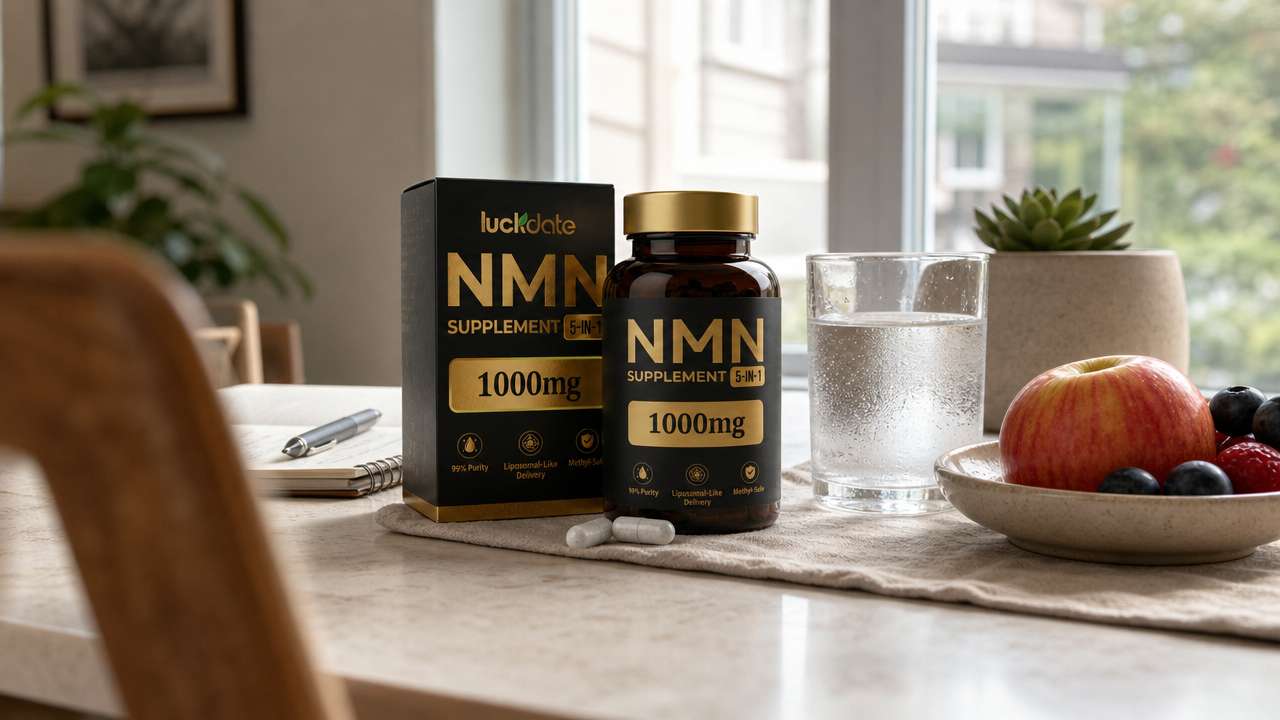
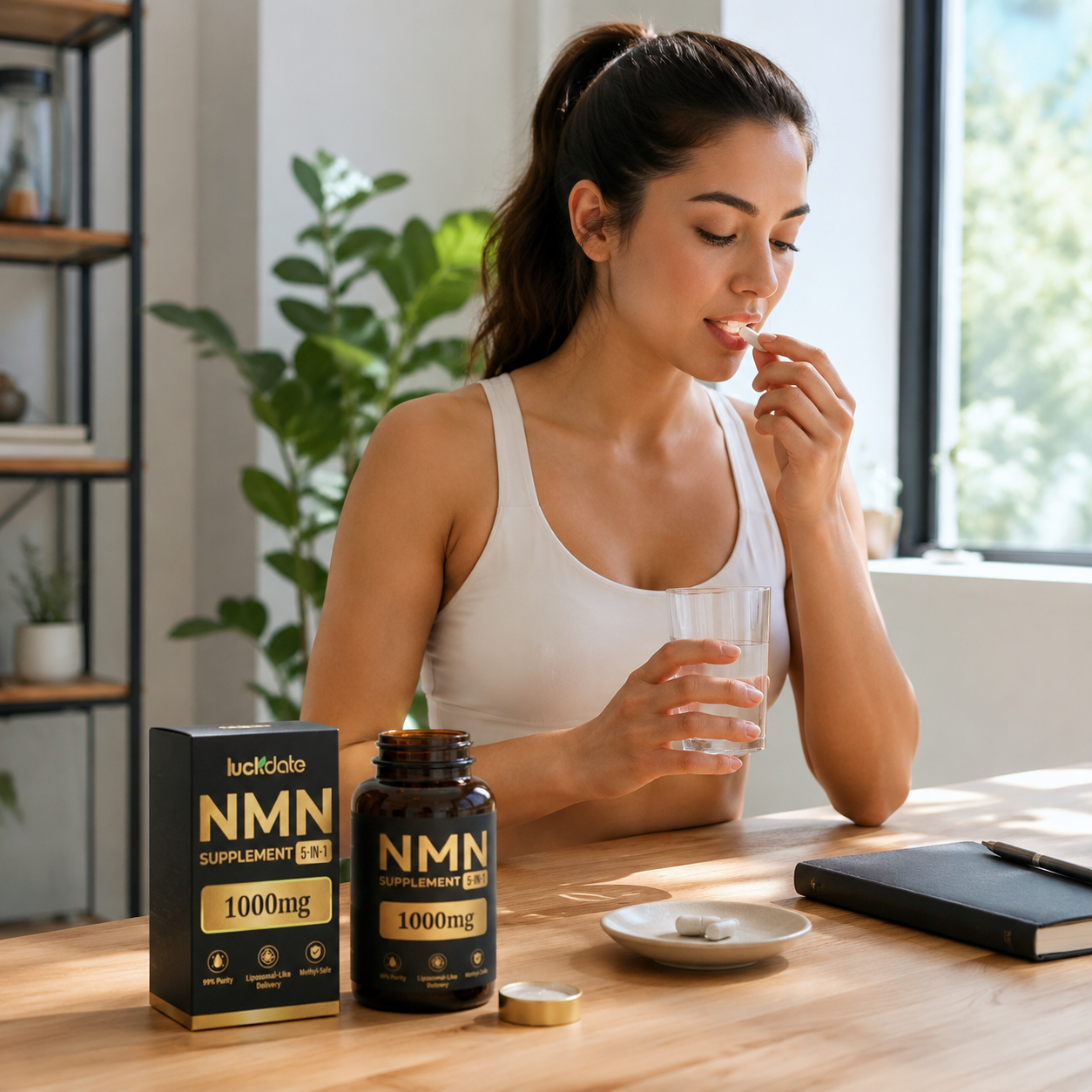
The 4-in-1 Liposomal NMN Supplement is a two-capsule formula that provides NMN 500 mg, trans-resveratrol 250 mg, quercetin 150 mg, and resveratrol 100 mg per serving. It is designed as a daily NAD+ pathway and cellular energy support option for adult men and women.
NMN, or β-nicotinamide mononucleotide, is a precursor the body can use to make nicotinamide adenine dinucleotide, commonly called NAD+. NAD+ participates in normal energy metabolism and many cellular reactions. Resveratrol and quercetin are polyphenolic compounds included as companion ingredients in the formula.
This formulation should be understood as a wellness supplement, not as a treatment or an age-reversal product. Human NMN research is still developing, and studies of NMN alone do not automatically prove the benefits of this finished four-ingredient combination. The product can have a role inside a consistent routine, while nutrition, movement, sleep, and appropriate healthcare remain the foundation.
2. Key Takeaways
- Serving size: 2 capsules.
- Confirmed NMN amount: 500 mg of β-nicotinamide mononucleotide per serving.
- Confirmed companion ingredients: trans-resveratrol 250 mg, quercetin 150 mg, and resveratrol 100 mg per serving.
- Intended role: NAD+ pathway, cellular energy, vitality, and healthy-aging routine support for adult men and women.
- Evidence boundary: Small human studies show that oral NMN can affect blood NAD+-related measures, but broad clinical benefits and long-term outcomes remain uncertain.
- Liposomal boundary: A product-specific absorption advantage should be claimed only when the finished formula's liposomal material, testing, and delivery data are documented.
3. Supplement Facts Per 2 Capsules
The confirmed active-ingredient panel for one two-capsule serving is:
- NMN (β-Nicotinamide Mononucleotide): 500 mg
- Trans-Resveratrol: 250 mg
- Quercetin: 150 mg
- Resveratrol: 100 mg
Based on the confirmed panel, the formula provides 500 mg NMN per 2 capsules. All ingredient amounts in this article refer to that two-capsule serving unless stated otherwise.
The panel lists trans-resveratrol and resveratrol on separate lines. Trans-resveratrol is a specific form of resveratrol, so the identity and source of the additional 100 mg resveratrol should be explained on the finished label or product specification. If both lines represent separate quantities, the serving contains 250 mg specifically identified as trans-resveratrol plus another 100 mg identified more generally as resveratrol. The article does not assume the form, purity, or source of that additional 100 mg without documentation.
What the panel does not establish by itself
An ingredient list confirms identity and amount, but it does not by itself prove absorption, clinical synergy, purity, stability, or a specific health result. Those questions require manufacturing specifications, finished-product testing, and, for efficacy claims, appropriately designed human research on the actual formula.
4. How NMN and NAD+ Relate to Cellular Energy
NMN is a precursor involved in the body's production of NAD+, a coenzyme required for reactions that convert nutrients into usable cellular energy. NAD+ also participates in cellular signaling and serves as a substrate for enzymes involved in normal maintenance and stress-response processes.
The phrase cellular energy support describes this biochemical pathway. It does not mean the capsules act like caffeine or guarantee a noticeable energy increase. Daily energy can also be influenced by sleep, food intake, hydration, activity, stress, medications, and underlying health conditions.
Human trials have reported that oral NMN can raise certain blood NAD+-related measures. A biomarker change is scientifically useful, but it does not automatically demonstrate better exercise performance, sharper cognition, less fatigue, slower aging, or disease prevention. Claims about those outcomes require direct clinical evidence.
Why the 500 mg amount needs context
Several early human trials have evaluated NMN doses between 250 mg and 500 mg, while other studies have tested different amounts and durations. The confirmed 500 mg per two-capsule serving falls within the range examined in some short-term human research, but this does not prove that the finished combination has the same results. Study population, duration, formulation, outcome measures, and companion ingredients all affect how research applies.
The formula combines one NAD+ precursor with three listed polyphenol components. Each ingredient has a distinct identity, while the benefit of taking all four together has not been established in a product-specific clinical trial.
NMN — 500 mg
NMN is the central ingredient and the direct basis for the product's NAD+ pathway positioning. Research interest focuses on whether oral NMN can influence NAD+ availability and related aspects of metabolism. Current human findings are preliminary and should be presented as supportive rather than transformative.
Trans-Resveratrol — 250 mg
Trans-resveratrol is the trans isomer of resveratrol and is widely studied among dietary polyphenols. Laboratory and clinical research has examined its interactions with signaling, oxidative-stress, and metabolic pathways, but findings vary by dose, population, formulation, and outcome. The 250 mg amount is a confirmed formula fact, not proof of a particular clinical benefit.
Quercetin — 150 mg
Quercetin is a flavonoid naturally present in foods such as onions, apples, and tea. It is included as a companion polyphenol in this formula. Product descriptions may use the word “synergy,” but a clinically meaningful NMN-quercetin synergy would require a controlled comparison of the complete combination against its individual ingredients.
Resveratrol — 100 mg
The panel separately lists 100 mg of resveratrol. Because trans-resveratrol is already listed at 250 mg, useful product documentation should identify whether the additional resveratrol has a specified trans/cis profile, botanical source, purity standard, or branded raw material. Until that information is available, the safest public wording is simply the label statement: resveratrol 100 mg per two capsules.
The formula's logic is complementary: NMN anchors NAD+ pathway support, while resveratrol and quercetin broaden the polyphenol profile. That formulation logic is reasonable to describe, but it should not be converted into claims of proven anti-aging, superior absorption, disease prevention, or guaranteed cellular repair.
6. What to Verify About Liposomal Technology
Liposomal technology generally refers to the use of lipid-based structures to carry an ingredient, with the goal of supporting stability, dispersion, or delivery. Whether this product can be described as liposomal depends on the finished formulation and supporting documentation, not on the four active-ingredient amounts alone.
The confirmed Supplement Facts panel identifies the active ingredients and doses but does not state which ingredient is liposomal or provide details about phospholipids, encapsulation, particle size, stability, or bioavailability. Until those details are confirmed, the product name may include “Liposomal,” but the article should not promise better absorption or state a measured bioavailability advantage.
Documentation that would strengthen the liposomal claim
- the name of the ingredient or ingredients that are liposomally delivered;
- the phospholipid source and any relevant allergen information;
- finished-product or raw-material encapsulation data;
- particle-size distribution and stability specifications, when applicable;
- a Certificate of Analysis or technical specification tied to the formula;
- human pharmacokinetic data on the finished product, if any absorption percentage is claimed.
Without product-specific human data, a compliant description is that liposomal technology is intended to support delivery. It is not appropriate to provide a numerical absorption claim or guarantee superior bioavailability.
7. What Human Research Can and Cannot Show
Human NMN research supports cautious interest, but the evidence remains limited by small samples, short study periods, varied doses, and different participant groups.
A randomized, double-blind, placebo-controlled study of 30 healthy adults evaluated 250 mg NMN daily for 12 weeks and reported an increase in whole-blood NAD+ compared with baseline. The study was small and short, and a blood NAD+ measure does not prove a noticeable improvement in daily energy or long-term health.
A separate study in 10 healthy Japanese men evaluated single oral doses of 100, 250, and 500 mg. No significant acute adverse effects were observed during the short monitoring period. Because it was a single-dose study with only 10 men, it cannot establish long-term safety or represent all adults.
Another randomized trial studied 250 mg daily for 10 weeks in 25 postmenopausal women with overweight or obesity and prediabetes. It reported improved skeletal-muscle insulin sensitivity in that specific population. The result cannot be generalized to weight loss, disease treatment, healthy men and women, subjective energy, or the four-ingredient product described here.
A 2024 systematic review and meta-analysis covering 12 studies and 513 participants found that NMN increased blood NAD measures overall, while most clinically relevant glucose and lipid outcomes were not significantly different from control groups. The review also identified risk-of-bias concerns and concluded that more research is needed.
Evidence for the complete combination
Studies of NMN alone do not establish the performance of NMN combined with 250 mg trans-resveratrol, 150 mg quercetin, and 100 mg resveratrol. The finished formula would need its own clinical study to support claims about unique synergy, energy, performance, cognition, healthy-aging outcomes, or bioavailability.
Resveratrol and quercetin also have their own safety and interaction considerations. Memorial Sloan Kettering Cancer Center notes potential interactions involving platelet function and drug-metabolizing enzymes. Clinical relevance varies, but these ingredients should be disclosed to a healthcare professional when medications are involved.
8. How to Use the Formula in a Practical Routine
A practical routine begins with the confirmed serving size of two capsules and follows the finished label's directions for timing, frequency, and use with food.
- Read the complete label: confirm that two capsules equal one serving and review all active and inactive ingredients, warnings, allergens, and storage instructions.
- Follow the recommended frequency: do not assume that “per serving” automatically means one serving every day unless the Directions section says so.
- Use a consistent time: if the label permits, connect the serving to a regular meal or another dependable daily cue.
- Start one new product at a time: this makes digestive tolerance, headaches, sleep changes, or other unwanted effects easier to identify.
- Keep expectations measurable: assess adherence, tolerance, cost, and whether the routine remains easy to maintain. Do not use short-term feelings as proof of an anti-aging effect.
- Protect the foundation: maintain balanced meals, regular movement, adequate sleep, hydration, and appropriate medical care.
Persistent fatigue or other unexplained symptoms should be assessed by a healthcare professional. A supplement can support a wellness routine but should not delay evaluation of anemia, sleep disorders, thyroid conditions, medication effects, or other possible causes.
9. Quality and Safety Checklist
A strong product decision depends on clear labeling, quality documentation, and individual suitability.
Label and manufacturing checks
- Confirm the two-capsule serving and all four ingredient amounts.
- Identify the source, form, and purity specification for NMN.
- Clarify why trans-resveratrol 250 mg and resveratrol 100 mg are listed separately.
- Verify the source and standardization of both resveratrol ingredients.
- Confirm the quercetin form and source.
- Identify which ingredient is liposomal and how that feature is tested.
- Review inactive ingredients, capsule material, allergens, storage requirements, expiration date, and lot number.
- Look for finished-product testing for identity, potency, microbial contamination, heavy metals, and other relevant contaminants.
Ask a healthcare professional before use when:
- you take anticoagulant, antiplatelet, blood-pressure, diabetes, chemotherapy, immunosuppressant, or other prescription medication;
- you have a bleeding disorder, hormone-sensitive condition, liver or kidney condition, or another diagnosed health concern;
- you are pregnant, nursing, trying to conceive, or preparing for surgery;
- you use other products containing NMN, nicotinamide riboside, niacin, resveratrol, or quercetin;
- you are considering the formula to manage persistent fatigue or another symptom.
Stop use and seek guidance if a concerning reaction occurs. Supplement suitability is individual, and the presence of familiar ingredients does not guarantee compatibility with every medication or health condition.
10. Frequently Asked Questions
How much NMN is in one serving?
One serving of two capsules provides 500 mg of NMN, according to the confirmed Supplement Facts panel.
What are the four ingredients in the formula?
The four listed active components are NMN 500 mg, trans-resveratrol 250 mg, quercetin 150 mg, and resveratrol 100 mg per two capsules. The label treats trans-resveratrol and resveratrol as separate entries.
Why are trans-resveratrol and resveratrol listed separately?
The confirmed panel does not explain the distinction. Trans-resveratrol is a specific form of resveratrol, while the separate 100 mg entry uses the broader name. Product specifications should clarify whether the additional 100 mg has a different source, form, purity, or raw-material identity.
Is the product definitely liposomal?
The product title identifies it as liposomal, but the active-ingredient panel alone does not show what is encapsulated or how the delivery system is verified. A technical specification, phospholipid information, or finished-product testing would be needed to support more detailed liposomal claims.
Does liposomal delivery guarantee better absorption?
No. Liposomal technology may be designed to support delivery, but a product-specific absorption advantage requires testing of the finished formula. The word “liposomal” alone does not justify a percentage increase or a guaranteed bioavailability claim.
Can this formula increase NAD+ and cellular energy?
NMN is a NAD+ precursor, and early human research shows that oral NMN can raise certain blood NAD-related measures. That pathway supports the product's cellular energy positioning, but the formula does not guarantee a noticeable energy change or a specific clinical outcome.
Is the formula suitable for both men and women?
The formula may be positioned for adult men and women, but individual suitability depends on the full label, medication use, health status, pregnancy or nursing, and professional guidance when appropriate.
Can the formula reverse aging or prevent disease?
No. Current human evidence does not show that this formula reverses aging, extends lifespan, or prevents disease. It should be presented as optional NAD+ pathway and healthy-aging routine support.
11. Extended Reading
A useful next step is to compare the complete package against the confirmed two-capsule formula, then verify the liposomal specification, resveratrol identities, Directions, warnings, and quality-testing information before publishing stronger product claims.
Required Disclaimers
This article is for educational and informational purposes only. It is not medical advice, diagnosis, treatment, or a substitute for guidance from a qualified healthcare professional. Product details are based on the Supplement Facts supplied for this article; always verify the final package label and current product specifications before publication or use.
Dietary supplements are not intended to diagnose, treat, cure, or prevent disease. Individual needs and experiences vary. Research on NMN, NAD+ support, resveratrol, quercetin, ingredient combinations, and liposomal delivery is ongoing. Current evidence does not establish age reversal, disease prevention, guaranteed energy improvement, or lifespan extension.
Consult a qualified healthcare professional before starting this or any supplement, especially if you are pregnant or nursing, take medication, manage a health condition, are preparing for surgery, use multiple supplements, or experience persistent or concerning symptoms. Follow the Directions and serving information on the current product label.